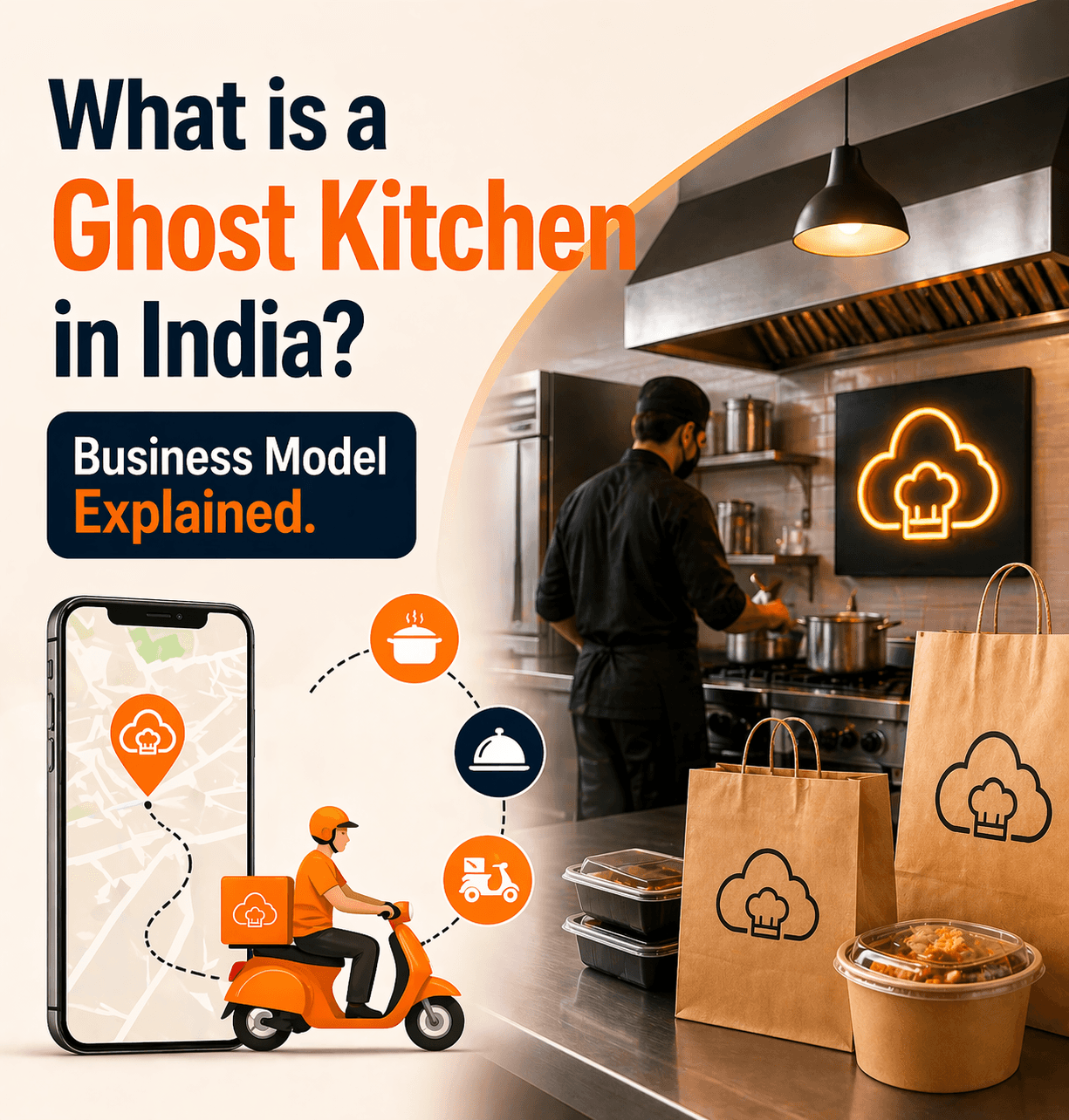
A ghost kitchen, also known as a cloud kitchen or virtual restaurant, is a delivery-only food business that operates without a dine-in space. In India, ghost kitchens have rapidly gained popularity due to the growth of platforms like Swiggy and Zomato, allowing brands to reach customers directly through online orders. Instead of investing heavily in interiors and prime locations, ghost kitchens focus purely on food preparation, packaging, and delivery, making them a low-cost and high-efficiency business model.
🚀 How the Ghost Kitchen Business Model Works in India
The ghost kitchen model is built around efficiency, scalability, and multi-brand operations. A single kitchen (typically 300–500 sq ft) can run multiple cuisines like pizza, Chinese, Indian, and desserts under different brand names. Orders are received through aggregators, processed in the kitchen, and delivered to customers via delivery partners.
💡 Key Components of the Model:
Aggregator Integration: Orders come from Swiggy & Zomato
Multi-Brand Strategy: One kitchen, multiple revenue streams
Centralized Operations: SOPs, supply chain, and menu standardization
Lower Investment: Around ₹10–12 lakhs to start
Faster ROI: Break-even in a few months with efficient operations
📊 Why Ghost Kitchens Are Growing Fast in India
Increasing online food ordering habits
Lower entry barriers for entrepreneurs
Higher margins due to reduced overhead costs
Ability to scale across multiple locations quickly
👉 This makes ghost kitchens one of the most profitable and scalable food business models in India today.